Your plant-based happy place. Welcome to the veginner community! ♡

FOR THE LOVE OF ANIMALS AND GOOD FOOD ♡

A little kindness
on your plate.
Goes a long way.

For me, eating more plants is a delicious way to put compassion into practice. Come explore the animals, land, and water behind our meals.

Show me the bigger picture ↓
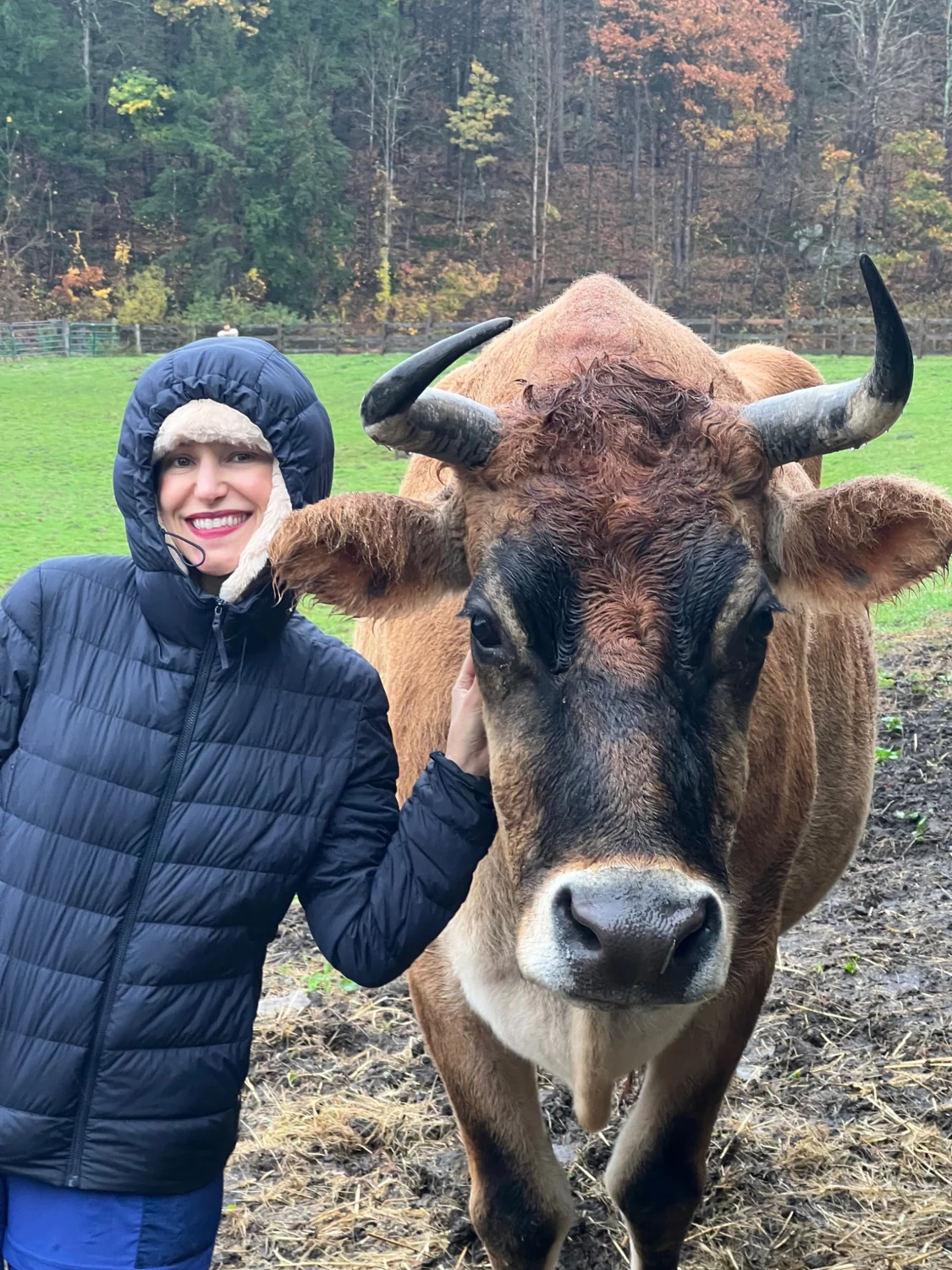
Cheryl sharing a gentle moment with a brown cow
The heart behind what’s cooking. ♡

A LITTLE CLOSER TO THEIR WORLD

Curious minds.
Lives that matter.

There’s more to these animals than what ends up on a supermarket shelf. Here’s a gentle, honest look at why their everyday lives matter.

Pigs have a lot going on upstairs.

They learn, remember, and solve problems. In a small 2021 study, four pigs learned to use a joystick to move a cursor toward a target for a reward. Their performance showed they could connect their movements with what happened onscreen.

That isn’t a ranking against dogs or children. It’s a lovely reminder that a pig has an active mind, with a need to explore and engage with the world.

Read the pig learning study ↗︎

Milk begins with a mother and a calf.

Like other mammals, cows produce milk after giving birth. In conventional dairy production, calves are commonly separated from their mothers early and fed separately, rather than staying together to nurse. The timing and care vary between farms.

Separation, limits on natural suckling, and isolation are welfare concerns. Dairy cows can also experience painful conditions such as mastitis and lameness. Choosing a plant milk is one practical way to step outside that production cycle.

EFSA: calf welfare ↗︎ RSPCA: dairy cow welfare ↗︎

Chickens need more than a place to stand.

Hens are motivated to forage, dust-bathe, perch, and find a nest. Cages and crowded housing can restrict these behaviors. Egg production also raises concerns about feather damage and breastbone fractures, including in some cage-free systems.

In egg production, male chicks can be killed shortly after hatching because they cannot lay eggs and the breeds grow too slowly for commercial meat production. Practices vary, and alternatives include identifying sex before hatching.

Chickens bred for meat face a different problem: rapid growth and crowding can make movement harder and contribute to leg and foot problems. Practices differ, but these concerns are why welfare researchers recommend more space and slower growth.

EFSA: laying hens ↗︎ RSPCA: male chicks in egg production ↗︎ EFSA: chickens raised for meat ↗︎

SOMEONE BEHIND THE STATISTIC

More than
a number.

Choosing a plant-based meal means choosing food without buying meat, eggs, or dairy for that meal. As those choices add up, they can help shift demand away from raising and killing animals for food.

Animals raised for food also have lives before slaughter. Compassion includes how they are housed, handled, transported, and treated along the way.

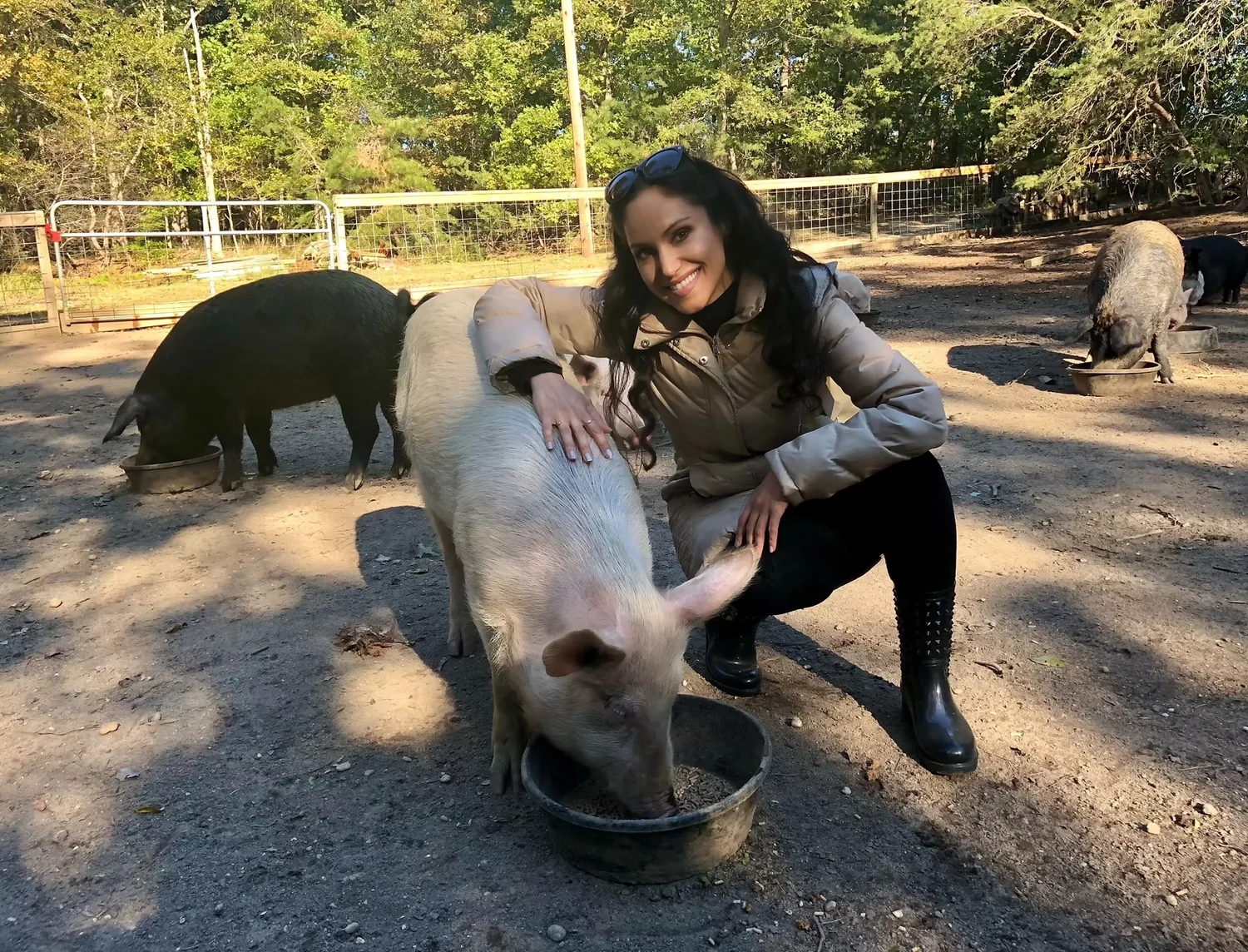
Cheryl gently petting a pig during a sanctuary visit
Kindness is always on the menu. ♡

A DIFFERENT KIND OF FOOD FOR THOUGHT

Same planet.
Different footprints.

A 2023 study linked 55,504 UK adults’ diets with food-production data. Compared with the high-meat group, vegan diets had approximately:

75%

lower greenhouse gas impact

75%

lower land-use impact

54%

lower water-use impact

Group-level estimates, with substantial uncertainty; high meat means at least 100 g daily. These are not guaranteed reductions for every person.

Scarborough and colleagues, Nature Food, 2023 ↗︎

A DAY. A MONTH. A DIFFERENT FOOTPRINT.

Explore the study numbers.

Compare a study diet group with its vegan group.

Illustrative difference

2.9 kg CO₂e
Selected group5.37 kg CO₂e
Vegan group2.47 kg CO₂e

For 1 day, using study group medians.

How this comparison works

Study medians are standardized to 2,000 kcal, age, and gender. The difference is multiplied by the selected days; this is an illustration, not a personal forecast. CO₂e includes multiple greenhouse gases. Food sourcing varies. It is not a calorie recommendation.

The paper reports uncertainty intervals. For example, daily vegan emissions were 2.47 kg CO₂e (2.09–3.36), compared with 10.24 (7.04–15.95) for high-meat diets. See Table 3 and methods ↗︎

WHAT IT TAKES TO FILL A PLATE

Plants feed us.
They feed farmed animals, too.

A big land footprint.

Poore and Nemecek’s 2018 global analysis found animal products used about 83% of farmland while providing 18% of calories and 37% of protein.

Each square represents 1% of agricultural land in that analysis.

Their worldwide animal-product-free scenario modelled around 76% less food-production land use. That is a global scenario, not land automatically restored by one person’s meal.

Poore and Nemecek, Science, 2018; Oxford summary ↗︎

THE RIPPLE EFFECT

Room for forests.
Care for water.

Water has a postcode.

Food’s water impact depends on where and how it is grown. Irrigating a crop in a water-stressed region is different from rainfall on pasture. A water-use figure is not the same thing as water scarcity or pollution.

Plant-based does not mean impact-free. The useful question is what a food replaces, as well as how it is produced.

Study water-use methods and limitations ↗︎

More breathing room for habitats.

FAO’s global remote-sensing findings, released in 2021, attributed almost 90% of deforestation to agricultural expansion, with livestock grazing responsible for almost 40%.

Reducing land demand can ease pressure on habitats. Restoring forests still requires land protection and restoration decisions; there is no fixed “trees saved per meal” conversion.

FAO Global Remote Sensing Survey findings, 2021 ↗︎

LET THE GOOD CHOICES VEGIN

Start with something
you’ll actually enjoy.

Try a bean-filled bowl. Find a dairy-free swap you love. Cook one plant-based meal, then repeat it if it earns a spot in your rotation. There’s room to learn as you go.

Make a black bean bowl →Find a useful swap →Try the 30-day challenge →

Pull up a source.

Published research and original institutional sources. Figures retain their study dates and scope. Reviewed October 27, 2026.

  1. Scarborough et al. (2023), Vegans, vegetarians, fish-eaters and meat-eaters in the UK show discrepant environmental impacts ↗︎
  2. Oxford LEAP (2018), summary of Poore and Nemecek’s food-impact study ↗︎
  3. Mottet et al. (2017), Livestock: On our plates or eating at our table? ↗︎
  4. FAO (2021), Agricultural expansion drives almost 90 percent of global deforestation ↗︎
  5. Mood et al. (2023), Estimating global numbers of farmed fishes killed for food annually from 1990 to 2019 ↗︎

WEAR A LITTLE KINDNESS

Plant-powered.
Heart included.

This little merch collection supports rescued animals, sharing a portion of the profits with Cheryl’s favorite sanctuaries.

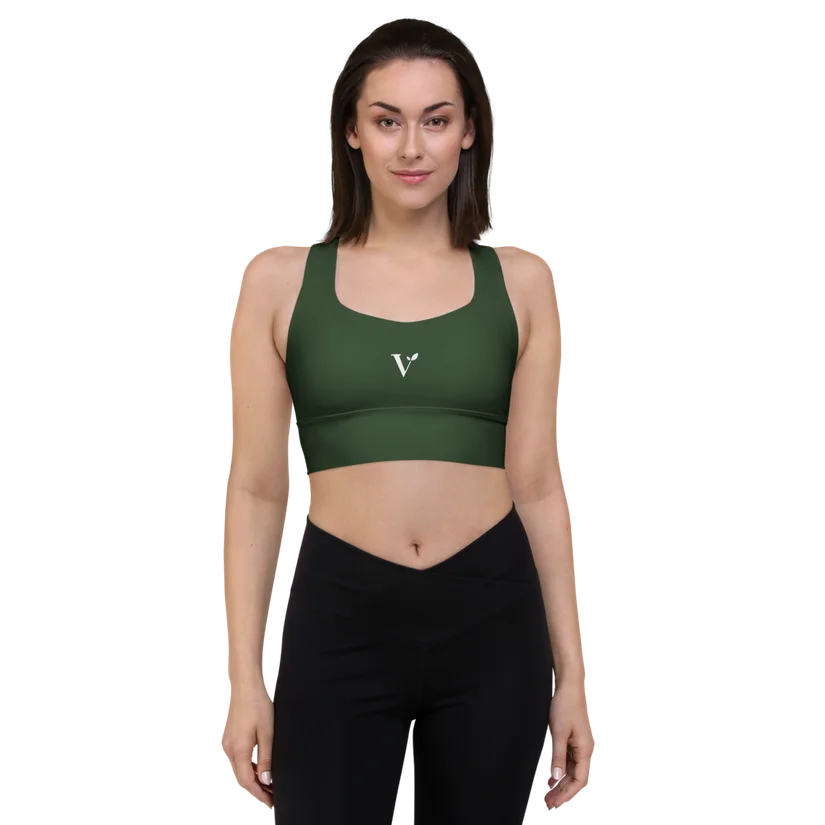
Veginner Recycled Longline Sports Bra

Veginner Recycled Longline Sports Bra

For a little plant-powered energy beyond the kitchen.

Currently ships to US addresses. Checkout and order support are handled by Printful.

See it in the merch shop ↗︎

A LITTLE HELP FROM MY KITCHEN

Hey, what’s cooking?

Let’s get you pointed toward something good.

A guided site helper. Messages go through the contact form.